
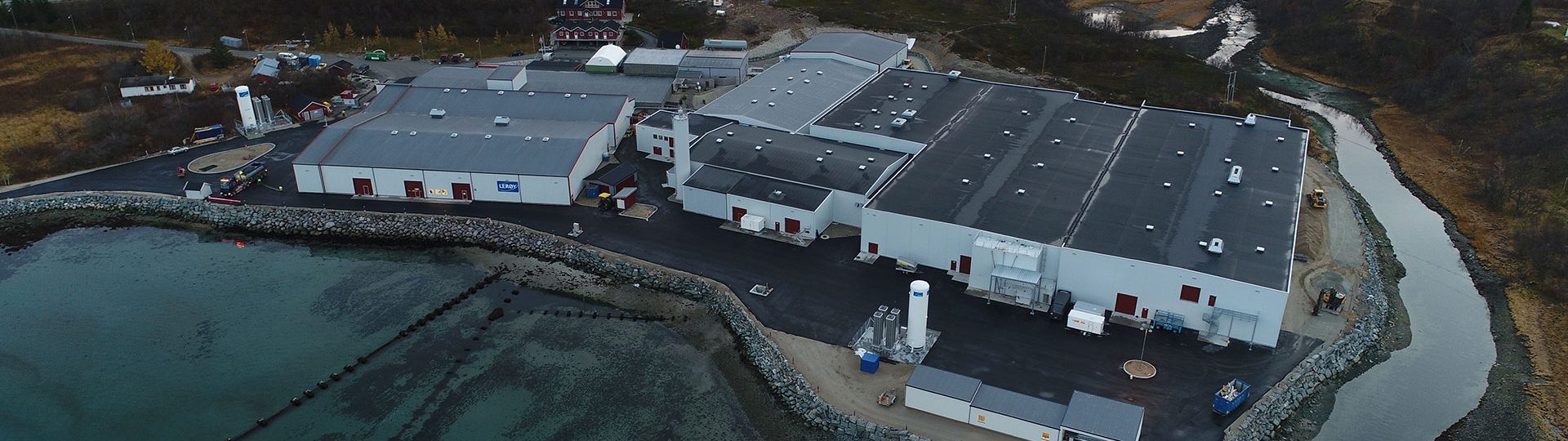
Located deep inside Friarfjord, we find Laksefjord – the facility that produces all the smolt for Lerøy Aurora’s food fish operations in Northern Norway. In 2025, an extensive modernisation of the energy installations has been carried out, replacing several older systems.
A key part of the project has been the transition from flow-through systems to recirculating aquaculture systems (RAS) in parts of the facility.
– This has been a large and complex project, and a close collaboration between Lerøy Aurora and PTG Kuldeteknisk, says Rune S. Olsen, Project Manager at PTG Kuldeteknisk.
Improved fish welfare with temperature control
Temperature regulation has been a major driver behind the upgrade. In Arctic regions, this is a particularly critical factor – both in terms of energy consumption and fish welfare.
– Good temperature control is essential for fish welfare, and robust smolt also leads to better growth later in life, says Gaute Andreas Sørflaten, Project Manager for the upgrade at Lerøy Aurora Laksefjord, and continues:
– In Northern Norway, freshwater is extremely cold most of the year. By switching from flow-through systems to RAS, the need for heating is significantly reduced.
The transition to RAS technology makes it possible to recirculate 96–99 percent of the water. Less intake of cold water therefore contributes to lower energy consumption related to heating.
The transition to direct-acting heat pumps also contributes to more efficient energy use.
– Today, energy is relatively inexpensive in Northern Norway, but this can change quickly. That is why it is crucial for us to choose energy-efficient technology, Sørflaten explains.

Gaute Andreas Sørflaten, project manager for the upgrade at Lerøy Aurora Laksefjord. Photo: David Jensen @jensenmedia
80,000 operating hours – minimal maintenance
Lerøy Aurora have collaborated with both PTG Kuldeteknisk and PTG Frionordica for years. The upgrade hence builds on experiences stretching back more than two decades.
– We purchased our first heat pump back in 2001 and have since had several models from PTG Frionordica, says Maren Charlotte Bø, Procurement Manager at Lerøy Aurora.
– Some of the pumps have operated for more than 80,000 hours with minimal maintenance. When choosing a supplier again, the decision was easy, Sørflaten adds.
The delivery included four new Frionordica HP heat pumps, installed and delivered by PTG Kuldeteknisk. A FrioEco heat pump has also been installed to ensure the correct temperature in the hatchery.
Sørflaten further explains that there has been a desire to standardise the technology at the facility, both to ensure high uptime and better redundancy.
– When we have one type of system, we reduce both the need for spare parts and inventory-related costs. This results in more robust operations and is both more sustainable and more reliable.
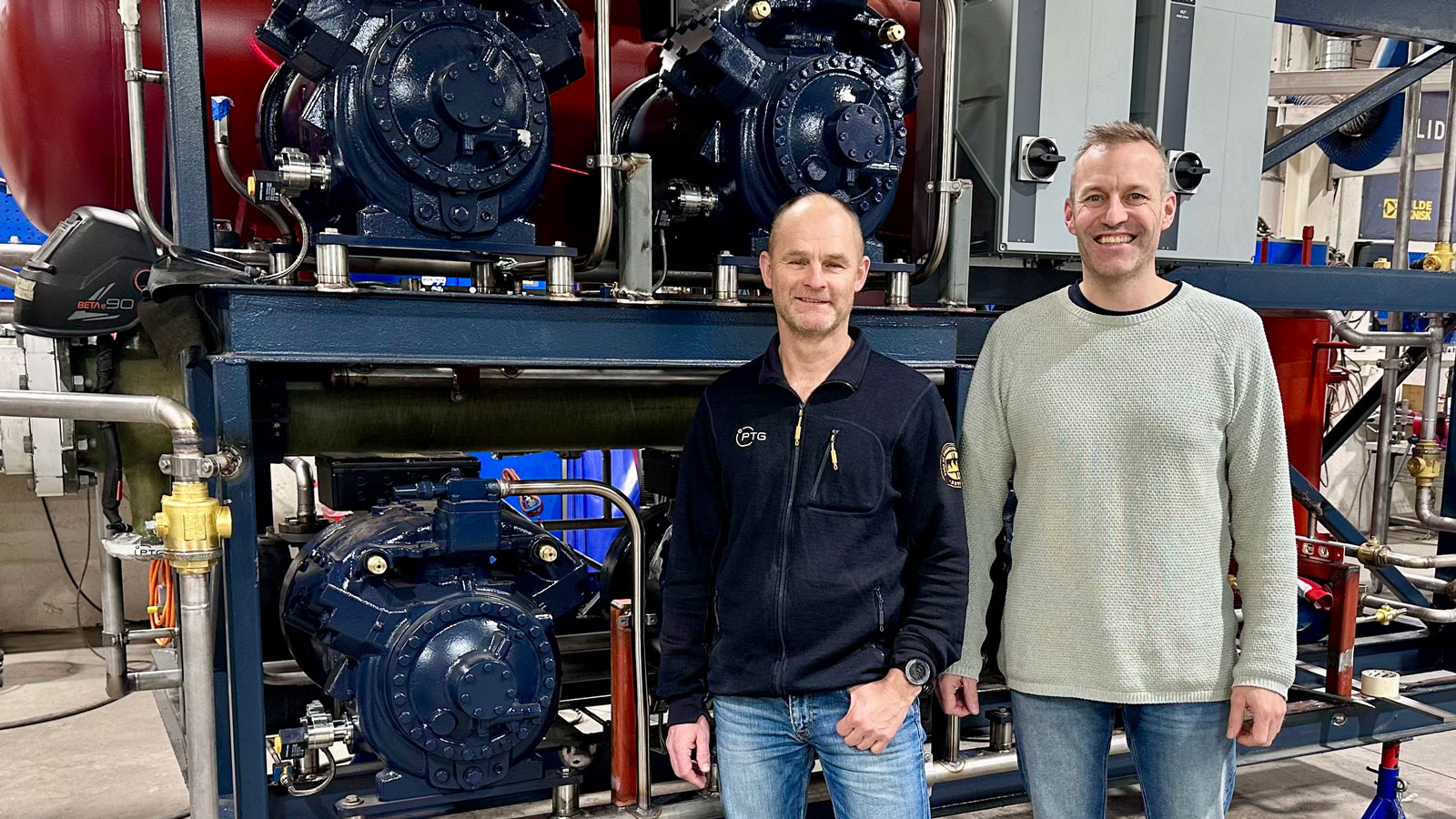
Rune S. Olsen (left) and Raymond Enoksen.
Strict sustainability requirements
The Laksefjord project has undoubtedly been extensive.
– Energy systems and heat recovery have been delivered to four departments, including engineering and design of water systems and automation solutions. The delivery also includes heat pumps, heat recovery exchangers, valves, CIP and pump systems, as well as automation control panels for monitoring and control, says Project Manager Olsen at PTG Kuldeteknisk.
Enoksen at PTG Kuldeteknisk describes the delivery as a clear example of Lerøy Aurora’s ambitions:
– Lerøy Aurora sets clear requirements for technology, fish welfare, and sustainability. The Laksefjord project is a strong example of this.
The choice of supplier was also based on these requirements:
– PTG was selected as a supplier because they meet the strict sustainability requirements Lerøy Aurora places on its subcontractors, Bø concludes.

Maren Charlotte Bø, purchasing manager at Lerøy Aurora.
Contact me if you want to know more about heat pumps
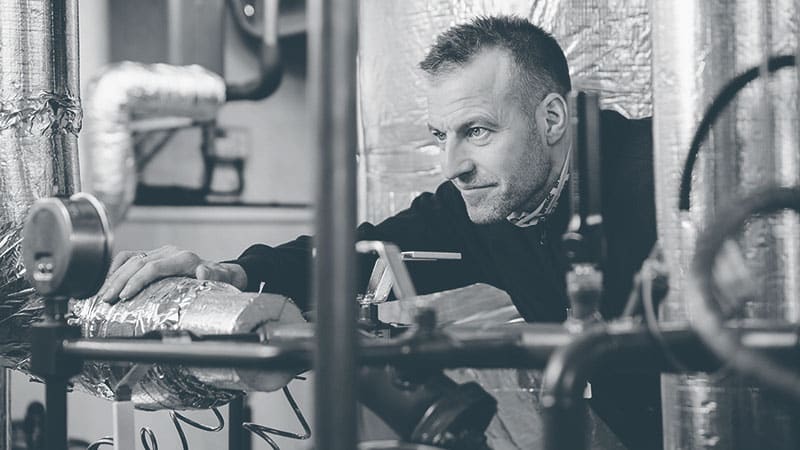
Raymond Enoksen
Sales Manager Land-Based Farming
Tel: +47 905 77 492
ren(at)ptg.no