
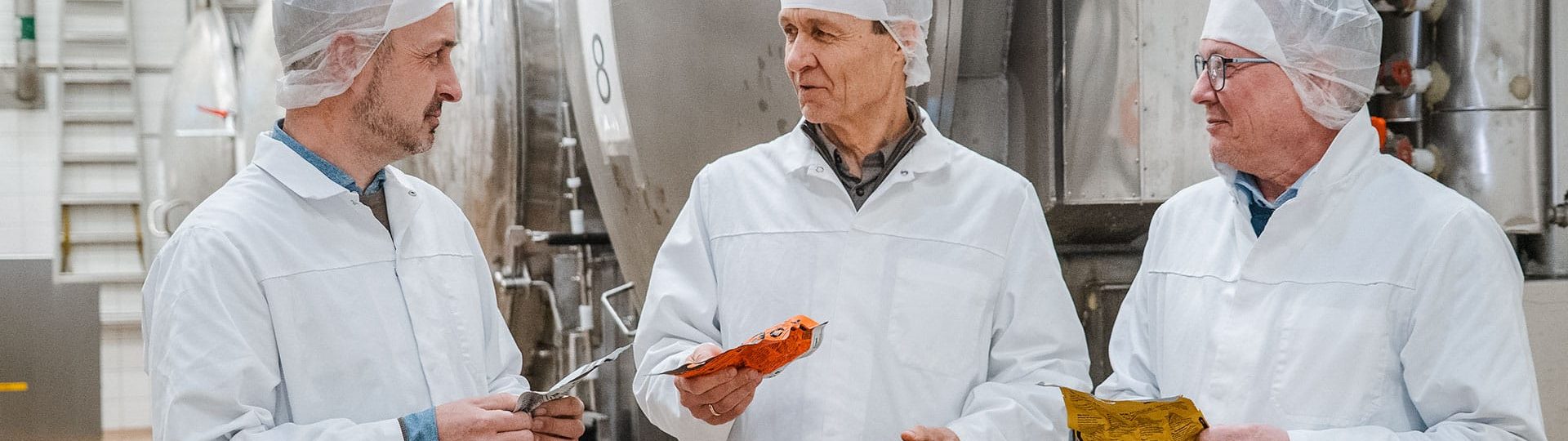
Drytech produces both field rations and products under the brand REAL Turmat at its factory in Ørneveien. From left: Frode Berg (PTG Kuldeteknisk), Trond Hansen (Drytech), and Roar Karlsen (Maritim Sveiseservice). Photo: Jørn Eilertsen.
When the Norwegian Forces finalised a new long-term agreement with Drytech in Tromsø last summer, it marked the end of a long and demanding contracting process. Now, six months later, the effects of the agreement are becoming visible. Drytech has begun delivering on the contract, production is running at full capacity, and the company has already started investing to meet increased demand.
Cannot be measured
The impact of the contract is felt far beyond the factory floor in Ørneveien. Local industrial companies have received contracts worth tens of millions of NOK.
“Such contracts create optimism and opportunities for local suppliers like us,” says Frode Berg of PTG Kuldeteknisk.
Together with Maritim Sveiseservice, they are supplying new drying chambers to Drytech –central to the production of both field rations and the company’s products under the brand REAL Turmat.
“When the Norwegian Armed Forces choose a supplier from Northern Norway, it creates important activity here,” says Roar Karlsen, Head of Finance and Market at Maritim Sveiseservice.
They agree that the value of these contracts cannot be measured solely in financial terms.
“This represents a major boost in competence. The knowledge we build through such deliveries stays with us and helps prepare us for other types of projects and customers,” they say.
At the Cutting Edge
That these suppliers are involved in the project is no coincidence. Their cooperation with Drytech spans more than 20 years, and specifications have become stricter with each delivery.
“Drytech is the most demanding customer we have when it comes to refrigeration specifications,” says Berg, adding:
“They challenge us in technological development, and they are willing to lead the way.”
The drying chambers now being built represent a new generation of solutions. Everything from material choices and surfaces to cleaning and maintenance has been further developed.
Karlsen adds:
“Drytech was also the first customer we had who required environmental accounting, long before it became standard in the industry.”
He continues:
“When requirements are set at a cutting-edge level, they drive innovation among suppliers. That is how an entire value chain is strengthened.”
Preparedness
For Trond Hansen, CEO of Drytech, choosing local suppliers is also about preparedness.
“We produce the fuel for soldiers so they can perform in demanding situations. That makes local production and availability crucial for preparedness,” he says, continuing:
“When we invest quickly and scale up production, it is a clear advantage to have suppliers close by. Then both expertise and capacity are available locally when the need arises.”
Industrial Ripple Effects in Practice
According to the trio, the Norwegian Armed Forces’ contract with Drytech demonstrates how industrial ripple effects work in practice.
“Tromsø is a city with a high share of public-sector jobs. At the same time, the need for more industry and value creation in the north has been a recurring theme in political debate for years,” says Karlsen of Maritim Sveiseservice.
Trond Hansen of Drytech points out how a single contract can influence this:
“Here, public funds have triggered investments, jobs, and development in a local value chain – not through subsidies, but through clear requirements and a well-designed procurement process. This should serve as an example for future investments, especially in defence.”
“If politicians are looking for examples that this works, they don’t have to look far. They can look to Tromsø,” agrees PTG’s Frode Berg.
Believe in international growth
Drytech already exports to around 20 countries and also supplies foreign armed forces. Increased capacity in Tromsø strengthens both the company’s international position and Norway’s ability to deliver when it really matters.
“We believe in continued growth, both in Norway and internationally. The contract has been a key factor enabling us to scale up and deliver larger volumes, also to other customers. This is positive for both us and national preparedness,” concludes Trond Hansen, CEO of Drytech.
Cannot be measured
The impact of the contract is felt far beyond the factory floor in Ørneveien. Local industrial companies have received contracts worth tens of millions of NOK.
“Such contracts create optimism and opportunities for local suppliers like us,” says Frode Berg of PTG Kuldeteknisk.
Together with Maritim Sveiseservice, they are supplying new drying chambers to Drytech –central to the production of both field rations and the company’s products under the brand REAL Turmat.
“When the Norwegian Armed Forces choose a supplier from Northern Norway, it creates important activity here,” says Roar Karlsen, Head of Finance and Market at Maritim Sveiseservice.
They agree that the value of these contracts cannot be measured solely in financial terms.
“This represents a major boost in competence. The knowledge we build through such deliveries stays with us and helps prepare us for other types of projects and customers,” they say.
At the Cutting Edge
That these suppliers are involved in the project is no coincidence. Their cooperation with Drytech spans more than 20 years, and specifications have become stricter with each delivery.
“Drytech is the most demanding customer we have when it comes to refrigeration specifications,” says Berg, adding:
“They challenge us in technological development, and they are willing to lead the way.”
The drying chambers now being built represent a new generation of solutions. Everything from material choices and surfaces to cleaning and maintenance has been further developed.
Karlsen adds:
“Drytech was also the first customer we had who required environmental accounting, long before it became standard in the industry.”
He continues:
“When requirements are set at a cutting-edge level, they drive innovation among suppliers. That is how an entire value chain is strengthened.”
Preparedness
For Trond Hansen, CEO of Drytech, choosing local suppliers is also about preparedness.
“We produce the fuel for soldiers so they can perform in demanding situations. That makes local production and availability crucial for preparedness,” he says, continuing:
“When we invest quickly and scale up production, it is a clear advantage to have suppliers close by. Then both expertise and capacity are available locally when the need arises.”
Industrial Ripple Effects in Practice
According to the trio, the Norwegian Armed Forces’ contract with Drytech demonstrates how industrial ripple effects work in practice.
“Tromsø is a city with a high share of public-sector jobs. At the same time, the need for more industry and value creation in the north has been a recurring theme in political debate for years,” says Karlsen of Maritim Sveiseservice.
Trond Hansen of Drytech points out how a single contract can influence this:
“Here, public funds have triggered investments, jobs, and development in a local value chain – not through subsidies, but through clear requirements and a well-designed procurement process. This should serve as an example for future investments, especially in defence.”
“If politicians are looking for examples that this works, they don’t have to look far. They can look to Tromsø,” agrees PTG’s Frode Berg.
Believe in international growth
Drytech already exports to around 20 countries and also supplies foreign armed forces. Increased capacity in Tromsø strengthens both the company’s international position and Norway’s ability to deliver when it really matters.
“We believe in continued growth, both in Norway and internationally. The contract has been a key factor enabling us to scale up and deliver larger volumes, also to other customers. This is positive for both us and national preparedness,” concludes Trond Hansen, CEO of Drytech.